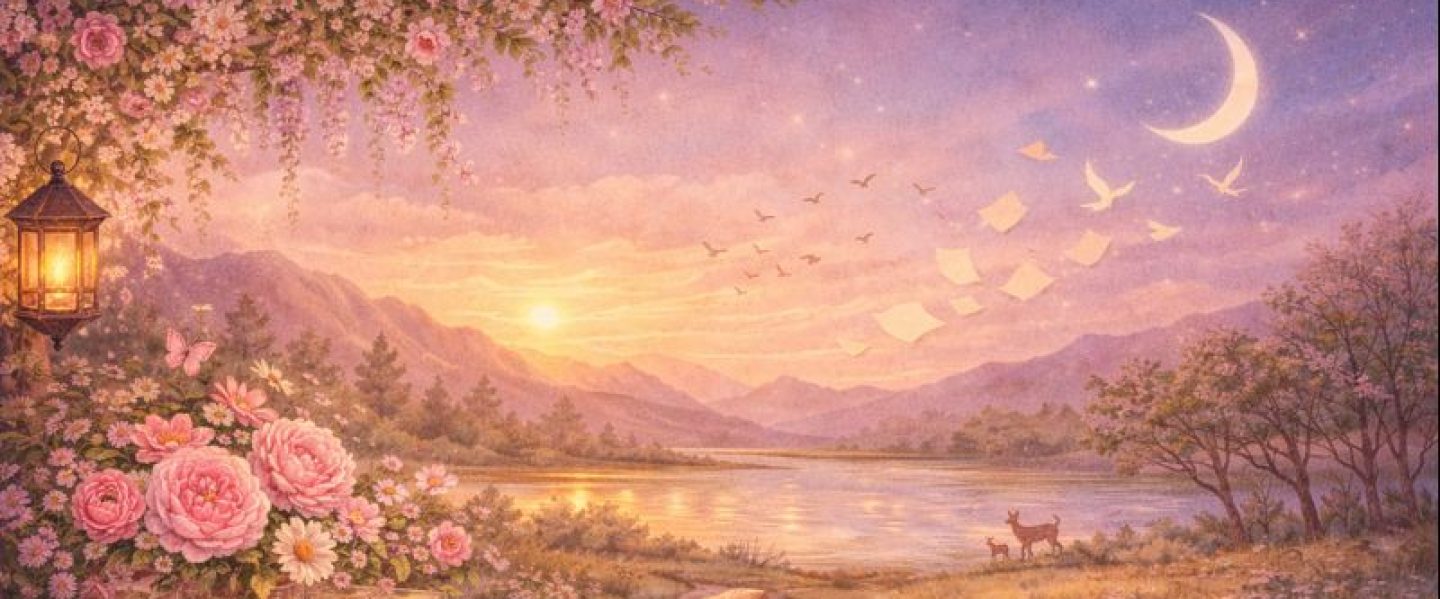


I hope that you enjoy the following poem, “The Cowgirl Poet.” It is about a lady who has a more intellectual nature attracted to someone who is quite different than herself in this respect and so remains aloof from him. But by the end of the poem, she realizes that they are alike in spirit for she has just as strong a desire to be free and independent as he and thus the name, “The Cowgirl Poet.”

The Cowgirl Poet
Oh, Mr. dad-blamed
I want none of your profane-
Me, a Midwestern gal, who’s used
to much tamer places
and unwithered faces;
not a man whose hands are as rough
as his way with words…
No red lipped fluesy am I…
that hangs out in saloons and waits for some guy.
Why, I went to finishing school
and have dreams up there in the starry sky…
moonlit nights with my mind
in rhapsodic trance with verse…
that is where my passion lies.
A poet is who I long to be…
whose works are judged profound,
and mentioned with such company…
as Bishop, Cather and Pound.
Not in wearing a plunging neckline
with painted lips,
to attract Mr. buckaroo boy.
Away, on the open plain
into the clouds, he rides
and one can hear the sound
of hooves as they meet the ground…
and soon he is out of sight.
Give me the hustling, bustling pace of the city
so I can lose myself…
into another place of existence.
Yes, Mr. Urbane who enchants me
with his sophistication and worldly wisdom,
who has tried many professions
and has a different vision.
I can’t defer to buckaroo boys who drink and kiss hard.
It is the life of the intellect-
fervid romance
with the softness of words… that I prefer,
and the sweet little mementos on my desk
from one who has been brought up in a manner
that speaks of gentility and tranquility.
Not destined to become the lady
of a cowboy knight riding on his bronco
under a bold moon…
alone in his world.
Yet there is a part of me,
sympathetic to a desire to be so free-
away from the crowds and the city lights,
and instead of the din of a siren howling…
a coyote’s faint cry
which can be heard in the still… desert night.
Maybe we are alike- you and I,
a longing to roam this earth
and be free of constraints…
to feel the breadth and depth of life before it is gone.
Yes, you and me,
dancing under a silvery moon,
to the strains of an old cowboy’s tune
before we finally… part.
Listen To Listen To The Cowgirl Poet: The Song
: The Song
Mama’s Don’t Let Your Babies Grow Up to Be Cowboys
This song sung by Waylon Jennings depicts the spirit of the Cowboy and his compelling need to be free. In that respect, cowboys remind of poets who also have a strong desire to be free to think and write their thoughts and sometimes lead an unconventional lifestyle.

“Don’t Fence Me In” sung by Roy Rogers is all about the cowboy or cowgirl spirt.
Roy Rogers sings…
“DON’T FENCE ME IN” in “Hollywood Canteen” with TRIGGER

I think that we all identify at times with the American cowboy and his freedom to ride away on his horse and live in a closer relationship with nature. The cowboy is uniquely American and is a kind of symbol for America and what it stands for- to be free to follow your heart and dreams. Maybe that’s why we like to watch TV shows and movies about them. The following is the beginning and ending of the famous Roy Rogers show which was very popular in the fifties and which always closed with Roy and Dale’s great duet theme song, “Happy Trails.”
Roy Rogers,Dale Evans And Sons Of Pioneers – Medley Greatest Hits(Classic Songs from the West)
Symphonic Works Depicting the Cowboy Spirit
Aaron Copeland was an American composer, composition teacher, writer, and later a conductor of his own and other American music. Much of his music is typical of what many people consider to be the sound of American music with its slow changing harmonies evoking the vast American landscape and its spirit. His works include the Appalachian Spring Suite, and the ballets: Billy the Kid and Rodeo. When you listen to these compositions, they create images of the American landscape with its vast openness, beauty, and the cowboy spirit.
Billy the Kid by Aaron Copland
Rodeo by Aaron Copland
Appalachian Spring Suite by Aaron Copland


Insight from this poem
The Cowgirl Poet explores the tension between two powerful human longings — the desire for refinement and intellectual identity, and the deep call of untamed freedom. The speaker initially distances herself from the rugged cowboy world, rejecting what she perceives as its roughness in favor of education, sophistication, and the cultured life of poetry and thought. She seeks recognition among literary greats and imagines a future shaped by intellect rather than raw experience.
Yet beneath this resistance lies a quiet fascination. The cowboy’s independence, connection to nature, and boundless freedom awaken something within her. The vast desert, moonlit skies, and haunting cry of the coyote symbolize a life unrestrained by societal expectations. What begins as contrast slowly transforms into recognition — the poet and the cowboy share a common yearning to fully experience life.
The poem ultimately reveals that refinement and wildness are not opposites but complementary aspects of the human spirit. Through imagery of moonlight, open plains, and gentle reflection, the work suggests that true fulfillment comes from embracing both intellect and instinct, structure and freedom. The Cowgirl Poet becomes a meditation on identity, choice, and the universal longing to live authentically before life passes.