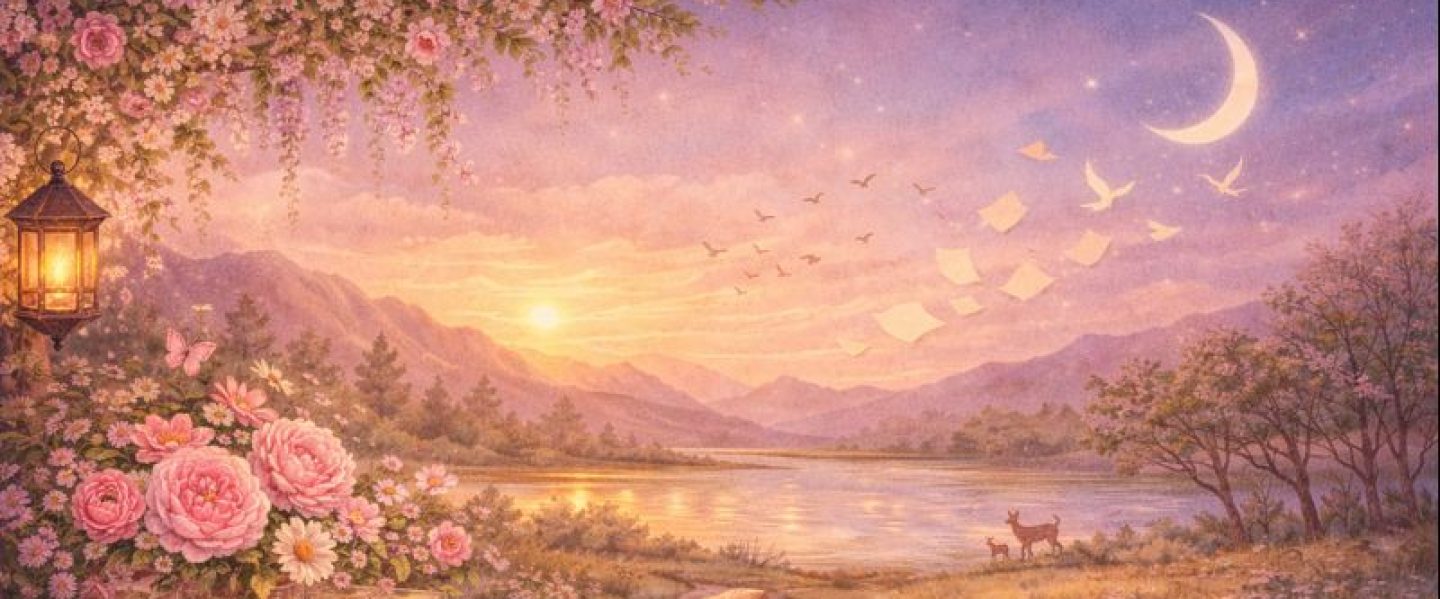

The Magic of Being
This poem is a long, luminous invitation. It asks you to race up a hill. To lie on the grass and find dragons in clouds. To feel the sun on your hands, hear a bird sing, look deep into a dog’s eyes. It visits the Eiffel Tower, the ocean floor, and the farthest corner of space — then asks you to make a wish on a star. And to actually do it.
The Magic of Being is the most expansive poem in Lora Hollings’ collection for young readers — a poem that moves from sensation to imagination to compassion to responsibility. It argues that simply being alive and paying attention is itself a kind of magic that no one else can perform quite like you.
The Poem
The Magic of Being
Feel the magic of the moment
up a hill as you race…
the wind blowing against your face
stand on your toes,
reach so high
with your fingertips
touch the sky.
As you lie on the grass,
the shapes in the clouds as you gaze
can simply amaze;
now you see a dragon
riding in a wagon,
or a seal juggling a ball
turning suddenly into a giant… so tall.
On a crisp autumn day
feel the sun as it gently warms
your hands, face, and feet;
above do you see
the golds, reds, and yellows in the trees?
Feel how soft is a puppy’s fur,
listen to a cat’s melodious purr…
look deep and you’ll see the love in your dog’s eyes,
up to see a hawk gliding effortlessly across the sky…
Imagine dancing on a flower,
looking down from the Eiffel Tower
traveling to a star…
from deep in the ocean to the farthest corner of space
the universe is such an extraordinary place!
Walk in a forest,
and marvel at the greatness of a tree;
look up into its canopy
at the light rays streaming
through its leaves.
Listen to a bird as it sings
and help one if it has a broken wing…
be in touch with your heart
for it can lead us to do noble things.
Live by the creed
to help those in need…
as it can indeed transform;
it is like a sort of magic
that no one else can perform
what only you can do;
Your life is important you see —
as your choices effect both you and me,
and all living beings
that unite us in common destiny.
Look up at the night sky,
how bright are the stars
and yet how far,
then make a wish
for it might come true…
but only if you do!
Contemplate the beauty of a sunset —
a musical tune that you can play,
listen to what a poem has to say…
admire the symmetry of a rose,
or the intricate pattern of a snowflake
as it tingles on the tip of your nose.
Never take a minute for granted
for all the wonderful things you can do…
the beauty that is all around,
the splendor that is waiting to be discovered by you!
Before You Read — Ask This
This poem works beautifully read outdoors, or before bed. These questions open the senses before the first word.
🌟 Wondering Questions
- What is one thing you noticed today that surprised you — something small that you almost missed?
- When was the last time you lay on the grass and looked at clouds? What did you see?
- What does the word “magic” mean to you? Does it have to be supernatural, or can ordinary things be magical?
- The poem says your life matters because your choices affect everyone. Can you think of one small choice you made today that touched someone else?
Word Treasure Box
Pleasantly musical and tuneful. A cat’s purr described as melodious elevates the ordinary into something worth truly listening to.
The high, spreading layer of tree branches and leaves that forms a kind of natural ceiling in a forest. Looking up into a forest canopy is one of nature’s most quietly stunning experiences.
Having fine moral qualities — generous, honourable, good. The poem says our hearts can lead us to do noble things. The heart, not the mind, is the guide.
A guiding principle or set of beliefs. The poem offers one: live to help those in need. Simple enough to remember, deep enough to last a lifetime.
A shared future or fate that connects all living things. The poem’s most profound claim: our choices ripple outward and touch everything.
A balanced, proportional arrangement — where one side mirrors the other. A rose and a snowflake both have it. Noticing symmetry is a form of paying attention to the hidden order in things.
Flashcard Study Set
Nine cards exploring the poem’s vocabulary, imagery, and the invitation to notice. Click any card to flip it.
After You Read — Talk About It
The poem says there is magic “that no one else can perform — what only you can do.” What is something only you bring to the world? Not a skill — a quality, a way of seeing.
Among all the beautiful things in the poem, it pauses to say: help a bird if it has a broken wing. Why does this line sit among images of wonder? What does it say about the relationship between beauty and care?
The poem says a wish might come true — “but only if you do.” What wish do you have right now? What would you have to actually do to help it come true?
The poem says your choices affect all living beings in a common destiny. Do you believe that? Can you trace one choice you made today forward into the world?
The poem ends with “never take a minute for granted.” What is one minute from today that you could have taken for granted — but shouldn’t?
By the end, what do you think the poem means by “the magic of being”? Is it magic because it’s rare? Because it’s surprising? Because it’s yours?
Real Wonders — The Science
🍃 Did You Know?
- Cloud-watching is real cognitive play. Finding shapes in clouds is called pareidolia — the brain’s tendency to find familiar patterns in random shapes. It’s a sign of a healthy, active imagination.
- Snowflakes really are symmetrical. Every snowflake has six-fold symmetry because of the way water molecules arrange themselves when freezing. And no two are exactly alike — a fact that has been confirmed by scientists looking at billions of them.
- A cat’s purr has measurable healing properties. The frequency of a cat’s purr (25–150 Hz) has been shown to promote bone density and reduce stress in both cats and the humans who listen to them.
- Forest canopies are entire ecosystems. The canopy layer of a forest — the top spreading layer of branches — is home to thousands of species that never touch the ground. Looking up through it really is looking into another world.
Create & Explore
✨ Activities to Try
- Sense Walk: Take a walk outside with one page of paper. For each of the five senses, write down one thing you notice. Bring the list back and read the poem again. How many things in the poem did you also find?
- Cloud Journal: On the next cloudy day, lie on the grass for five minutes and write down every shape you see. Describe them in at least two words each. Draw the most interesting one.
- My Magic Creed: Write your own version of the poem’s creed — the guiding principle you want to live by. Keep it to one sentence. Make it specific enough that you could actually follow it tomorrow.
- The Wish + The Do: Write your biggest wish. Then write three concrete actions you could actually take toward it. The poem says the wish is only possible if you do — so start the doing.
Reading Guide
| Element | What to Notice |
|---|---|
| Movement | The poem never stays still. It moves from hill to grass to forest to ocean to space to snowflake. This restless range is the point: wonder is everywhere, and everywhere is accessible to you right now. |
| Second person | “You” appears throughout — this is not a poem observed from outside. It is spoken directly to the reader, making it feel urgent and personal. The poem is talking to you, specifically. |
| The pivot to responsibility | Halfway through, the poem shifts: from noticing beauty to acting on it. “Help one if it has a broken wing.” Wonder without compassion is incomplete. This is the poem’s deepest move. |
| Central Message | Presence is its own form of magic. To be fully alive — noticing, feeling, imagining, helping — is both a gift and a responsibility that belongs to you alone. |
- Map the senses: Go through the poem and identify which sense each image appeals to. Which sense appears most? Which appears least? Why do you think the poem prioritises the senses it does?
- Find the pivot: At what line does the poem shift from wonder to responsibility? What is the exact moment, and what makes it feel different from what came before?
- Count the “you”s: The poem uses “you” many times. Find them all. What is the effect of being addressed so directly and so repeatedly?
- The impossible and the possible: The poem asks you to imagine dancing on a flower and traveling to a star, but also to help a bird with a broken wing. Which images are literal? Which are imaginative? Does the mix matter?