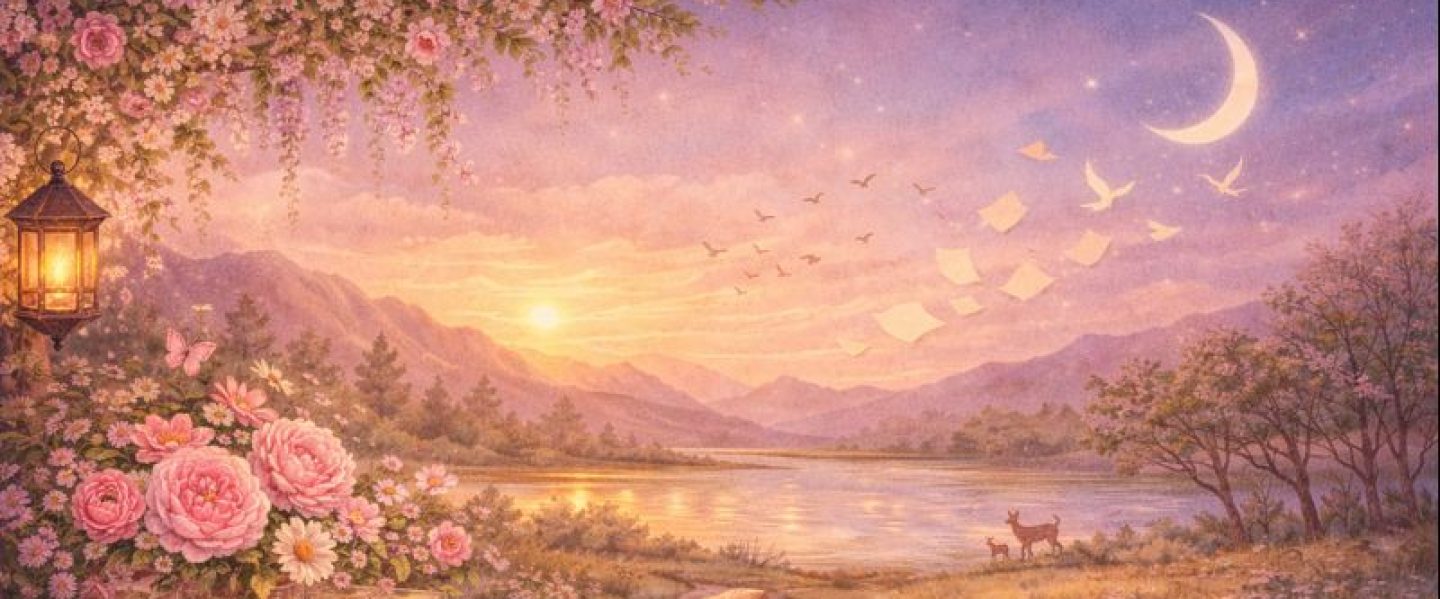
The Flower Garden

A Poem That Celebrates Diversity

This poem, “The Flower Garden” is about the importance of appreciating individuality as opposed to uniformity in our families, at work, at school, in our communities and in our society on every level. It is diversity which makes our societies great not uniformity and sameness but our differences.

The Flower Garden

One day, as I was walking
I came across a garden…
long I stood there to gaze
every flower seemed perfect
and worthy of praise…

bold in color, refined in symmetry…
how difficult a task to select from these
the one that would the most please,
as somehow their beauty was uniform;

but I beheld one in particular,
a little flower
that first looked quite ordinary-
yet with fragile beauty
it somehow beguiled…
I stood there for quite a while.

As the sun’s rays
gently fell down on its petals,
it stood out among all the rest
with a singularity…
a flower that many would have ignored-
for it might not have passed the critic’s test
but nonetheless a beauty it did suggest;

and upon closer look
its glory would suddenly unfold,
with its petals
a soft palette of pastels,
to one who could behold…

but to the impatient,
undiscerning eye-
it would have been dismissed,
and lack of perception
so confirming its imperfection;

unattended to would have wilted
or treated as a weed
for those more salient qualities
in their criteria which it could not meet…

and in a wasteland tossed
its virtue lie in vain,
a beauty never to be seen again
as it slowly dies…its uniqueness forever lost.

~ Lora Hollings

Listen To The Flower Garden: The Song

Helping Children Understand the Beauty of Being Different

A Gentle Lesson from The Flower Garden

“The Flower Garden” as a foundation for lessons

Parents and educators often use “The Flower Garden” as a foundation for lessons on empathy and social awareness. Common discussion questions and activities include:

Discussion Questions

  • Symbolism: “If the garden represents our world, what do the rows of identical flowers represent compared to the single unique flower?”
  • Individuality: “Why do you think the poet describes the unique flower as ‘fragile’ but also ‘beautiful’? Does being different make someone weaker or stronger?”
  • Empathy: “How would the unique flower feel if the other flowers ignored it? How can we make sure everyone in our ‘garden’ feels included?”
  • Personal Connection: “Can you think of a time when you felt like the unique flower? What did you want others to notice about you?” 

Lesson Ideas

  • Art Integration: Have children draw a “Garden of Diversity” where every flower is intentionally different in shape, color, and size to celebrate their own unique traits.
  • Nature Study: Pair the poem with a visit to a real garden to observe how different plants require different care (sunlight, water, soil) to thrive, reinforcing that “one size does not fit all.”
  • Metaphor Writing: Ask students to write their own short poem using a different nature metaphor (like a forest of trees or a school of fish) to represent the beauty of being different.
  • Character Study: Use the poem to discuss “World Down Syndrome Day” or other inclusion events, focusing on the idea that “every child is a unique flower”.

These activities help children move from simply reading the poem to understanding its deeper message about humanity and kindness


How you can use the flower garden as a lesson for your child in acquiring insight about the value of individuality.

The Flower Garden offers more than a poetic image—it opens a doorway for meaningful conversations with children about individuality, empathy, and self-worth.

When a child asks if “fragile” means “weaker,” you can explain that it actually describes something precious and rare that requires extra care—not because it is less capable, but because it is of higher value.

1. The “Treasure” Explanation

Explain that “fragile” is like a beautiful piece of glass art or a rare heirloom. It isn’t “weak” because it can’t do things; it is “fragile” because it is so special that it deserves to be handled with extra kindness. Just as we are more careful with a delicate butterfly than a common rock, we show more gentleness to someone who is unique.

2. The “Sensitivity” Explanation

Be You can also explain that the unique flower’s fragility is actually a superpower of feeling.

  • Another perspective: Being fragile can mean you are more “in tune” with the world.
  • The Lesson: The flower might feel the sun’s warmth more deeply or notice the gentle breeze that others miss. Its “fragility” is really its sensitivity, which allows it to bring a different kind of beauty and “soul” to the garden that the tougher, identical flowers cannot.

3. The “Inner Strength” Explanation

Point out that even though the flower is described as fragile, it is still standing in the same garden as all the other flowers. It is brave for being the only one of its kind. Its strength isn’t in being “tough” like a brick; its strength is in its courage to be different despite its delicate nature.

By shifting the definition from “lack of strength” to “abundance of value,” you help the child see that being “fragile” or “different” is a trait to be cherished and protected, not a flaw to be fixed.


“The Flower Garden for Homeschooling Families

Show me how other people have used the flower garden poem in a homeschool lesson 

In homeschool settings, parents often use Lora Hollings’ “The Flower Garden” as a “living book” resource—a core concept in the Charlotte Mason method that emphasizes learning through high-quality literature rather than dry textbooks. 

Here is how parents have integrated the poem into specific lessons:

1. Inclusion & Diversity Lessons

Homeschoolers frequently use the poem’s central metaphor—a garden where one unique flower stands out among uniform rows—to discuss social equity. 

  • The Activity: Parents often pair the reading with World Down Syndrome Dayor World Poetry Day to celebrate the “fragile beauty” of individuals who don’t fit a standard mold.
  • The Lesson: It serves as a prompt to discuss why “difference” is a strength rather than a weakness. 

2. Nature Journaling (Charlotte Mason Style)

Nature study is a hallmark of many homeschool curricula, such as Oak Meadow or AmblesideOnline

  • The Activity: After reading the poem, children go into their own backyards or a park to find a “unique” plant or flower that looks different from the others.
  • The Lesson: Students sketch the flower in a nature journal, noting its “fragile beauty” and specific characteristics that make it stand out, practicing both observation and descriptive writing.

3. Language Arts: Metaphor & Analysis

For older students, the poem is used to teach literary devices.

  • The Activity: Parents use the poem for copywork (practicing handwriting while internalizing the text) or as a found poemexercise, where students rearrange phrases from the poem to create their own work about identity.
  • The Lesson: Students analyze how Hollings uses words like “uniformity” versus “individuality” to build a moral argument. 

4. Emotional Intelligence (SEL)

In groups like Wild + Free, the poem is shared to foster emotional learning. 

  • The Activity: Parents lead a “Thought Garden” discussion, asking children to visualize their own minds as gardens where they can choose to grow “seeds” of kindness and acceptance.
  • The Lesson: It helps children develop a “growth mindset” by viewing their unique traits as something that “enriches” the world’s garden. 

Closing Reflection

The Flower Garden reminds us that the world is not made more beautiful by sameness—but by the quiet courage of those who bloom differently.

And perhaps the most important lesson we can share with a child is this:

You are not meant to be like every other flower—
you are meant to be uniquely, beautifully you.

The Poem’s Insights

In Lora Hollings’ poem “The Flower Garden,” the speaker learns a profound lesson from observing the “little flower” amidst the larger, seemingly more impressive blooms.

The speaker initially perceives the garden’s beauty as being derived from the uniformity of its flowers. However, the little flower’s “fragile beauty” and its ability to “beguile” the speaker, makes the speaker realize that true beauty and strength lie in diversity and the appreciation of individuality. 

This realization expands the speaker’s understanding of what constitutes a vibrant and harmonious society. The speaker learns to value the unique contributions of every member of a community, be it a family, a workplace, a school, or society at large, recognizing that diversity, rather than uniformity, is what truly makes societies great. 

Key Takeaways

  • The poem ‘The Flower Garden’ highlights the importance of appreciating individuality over uniformity in various aspects of life.
  • It presents a unique flower that symbolizes fragile beauty, encouraging readers to value differences rather than dismiss them.
  • Parents can use the poem to discuss themes of individuality, empathy, and acceptance with their children.
  • Creative activities, like drawing diverse gardens or exploring nature, can reinforce the lesson of celebrating uniqueness.
  • Ultimately, the poem conveys that true beauty and strength lie in diversity, making societies vibrant and harmonious.

The Silence – A Social Commentary

What is the Silence In The Following Poem?

The silence is the voice of truth about ourselves and our lives. In some works, the meaning of silence in poetry reveals depths that words alone cannot express. It bears witness to our deeds even if others aren’t there to witness our cruelty or our indifference to the suffering of other sentient beings. It bears witness to the cold heartedness that lets us walk by without helping even as others call out in pain or from desperate need.

The following poem is telling us to act with a sense of urgency about our lives, the way we treat others and the way we treat our planet. We need to alter the course of our lives to become more caring and compassionate in our actions to others- not only humans but other species as well- to change our old habits and expand our consciousness to live in harmony with others and stop the mindless destruction of our home. Through selfishness and our negative emotions such as hate, vindictiveness, greed and a need to feel power over others, we have become oblivious to the suffering of others and in the end it may very well cost us our lives as well.

The silence is telling us that our words in the places where we worship mean nothing if we just parrot what we hear and don’t live by them. In the end, our society like a deck of cards will tumble and fall if we don’t face the truth about ourselves and change our old ways of thinking and living, right now. And finally, the truth that we have denied for so long will at last be heard.

The Silence

There’s a silence
deep in the hearts of men
that bears witness to all his deeds…

Even those who never contemplate
what little they’ve done
for their fellow man-
a testament to their purposeless life,
if they could just stop to hear the silence.

This silence it gently beckons to be heard
in the stark light of a street lamp
where a woman
and a child beg for food…

As a man beats a dog
and another indifferently looks on;
as a child is abused by his own parent,
a voice shrill
while hers is stilled.

After a gun volley has been fired
and so many lifeless bodies
can be seen;
children dazed,
cries muffled as the other
sounds compete for attention…

The silence
loud in the ears of the victims who cling to life
in a despairing moment to survive…
and yet it gets lost in
sound bites in a quick summary of today’s news.

It can be heard
between the notes of a sorrowful dissonance
in a composition by Charles Ives-
between the cries of a child
drowned out by the sirens of the city’s streets…

Between the cries of a dog
chained every day,
deprived of food and water
who has never known a day of kindness.

But the silence is too faint to the ears
of those deafened by the
hardening of their own hearts
and souls to their routine existence.

You can hear the silence if you walk
very early in the morning hours…
or very late at night.
It envelops the world as its atmosphere
and runs deep as a cavern all through the earth…

After a rain
which purges some of the stains
and always in the
sounds of nature…to gently remind us of its presence…

You can hear the silence
in a river flowing
or in a pause between the waves which hit the shore,
between the pulses of a heartbeat.

The silence which struggles to be heard
in the pauses of a rhythmical chant
at a sacred temple of humanity’s past…
caught in a futile dance
with the empty syllables of meaningless words.

And as a deck of cards so constructed-
to stand momentarily before
it tumbles and falls
in a precarious balance of contrived form…

It must last give way to the Silence
in its deafening cry-
if there is still a soul
around to hear
its words.

~ Lora Hollings

Listen To The Silence: The Song

How Precious is the Time We Have

From this poignant song “Wise Enough” by Lamb, the lyrics go…

"How precious is the time we have. Are we not wise enough to give all we are? We have a chance to make a difference to our dying day."

I’m Going to find a Way to Say It

"I'm going to find a way to say it. Sing it from the tallest tree."

Maybe we all need to find another language. The language of peace and love. To live up to our human potential and be all that we can be.

Insights on The Silence

The Silence is a powerful meditation on conscience—on the quiet, inescapable truth that lives beneath noise, denial, and distraction. In this poem, silence is not absence; it is presence. It bears witness when no one else will. It remembers what society tries to forget. The poem insists that silence is not neutral—it records our cruelty, our indifference, and our failure to act when confronted with suffering.

Through stark images—a woman and child begging, a beaten dog, abused children, gunfire, and dazed survivors—the poem exposes how suffering is often drowned out by routine, media sound bites, and emotional numbness. The repetition of silence throughout the poem emphasizes its persistence: even when ignored, it remains. It grows louder to those who suffer, while fading for those whose hearts have hardened through habit, comfort, or fear.

Nature becomes a contrast to human-made noise. Silence is found in rivers, rain, waves, and the pause between heartbeats—suggesting that truth is woven into the natural world, waiting for us to listen. Yet the poem warns that words spoken in sacred spaces mean nothing without lived compassion. Ritual without action is hollow.

And finally, the house-of-cards imagery symbolizes the fragility of a society built on denial and inaction. Eventually, the structure collapses. In the end, silence becomes a plea—urging awareness, responsibility, and change.

Key Takeaways

  • The silence reflects the truth about our actions and indifference towards suffering.
  • It urges us to change our habits, showing that compassion is essential for harmony with others and the planet.
  • The poem illustrates silence as a witness to cruelty and neglect, contrasting it with the noise of daily life.
  • Nature holds the silence, suggesting that truth exists in the world around us, waiting to be heard.
  • Ultimately, the poem teaches that wisdom arises from being in touch with our hearts and being present in our lives.
The moral urgency explored in The Silence: A Social Commentary calls attention to conscience, responsibility, and the cost of indifference—themes that find balance and hope in the quiet renewal of A New Day Has Come. That sense of renewal is grounded in love and legacy through Inspiring Poems About Mothers, where care, guidance, and the future are deeply intertwined. These reflections are further anchored by The Gift of Love, which reminds us that compassion and presence are not abstract ideals, but lived choices that shape both our inner lives and the world around us.

A Spook Filled Halloween

A Special Treat for Halloween

Halloween, Halloween,
oh, the ghosts and gobblins I’ve seen;
howling and screaming in the night,
they give me quite a fright!
With eyes glowing in the dark,
their cries piercing and stark.

On this windy autumn night
my imagination takes flight…
Is that a sound of an owl that I hear
or a gobblin which is near?

Is that a haunted house
up the way
with a real ghost looking from
a window… I say!
Or is it a child dressed in white
preparing to go out on this night?

Spooks abound everywhere,
so, take care, take…care,
with their glowing eyes
and shrill cries…
Just beware!

Halloween, Halloween-
a night in costume
of frightening fun,
with identity in disguise…
full of shrieks and surprise!

A masquerade,
of costumes on parade,
with trick or treat,
a fun-filled escapade!

~ Lora Hollings

“There is a child in every one of us who is still a trick-or-treater looking for a brightly-lit front porch.” ~ Robert Brault

Haunting Treats for Halloween

Better gobble these cookies down quick. They’ve been known to disappear!

Gingerbread Ghosts

1/2 cup granulated sugar
1/2 cup margarine, softened
1/3 cup molasses
2 1/2 cups sifted all-purpose flour
2 teaspoons ground ginger
3/4 teaspoon baking soda
1/2 teaspoon ground cinnamon
Pinch of salt

In a large bowl, blend together the sugar and butter. Add the molasses. Fold in the sifted flour, ginger, baking soda, cinnamon, and salt. Refrigerate for at least 2 hours.

Heat oven to 350 degrees F. Lightly grease a large baking sheet.

On a lightly floured board, roll out the dough until it is 1/8-inch thick. Cut out the cookie with a ghost-shaped cookie cutter and place on the baking sheet. Bake for 6 to 8 minutes, until lightly browned. Remove form the oven and let cool thoroughly on a wire rack before decorating with Frosting.

Frosting:
1 (16 ounce) box confectioners’ sugar, divided
1 teaspoon vanilla extract
Pinch of salt
3 to 4 tablespoons of soymilk
1 (8 ounce) package miniature chocolate chips

To half of the sugar add the vanilla extract, salt and 2 tablespoons of the milk. Mix well. Add the remaining sugar and mix again. Add as much of the remaining milk as you need to reach the desired consistency for spreading. Spread the Frosting on each cookie until it is totally white and looks like a ghost. For eyes, use two chocolate chips on each of the cookies.

Makes 2 dozen.


Healthy Kid Snacks For Halloween

Fruit Spiders Recipe

Creepy and crawly but deliciously cute, these healthy Halloween fruit spiders are so much fun, your kids will be begging for more. For complete instructions on making these Halloween critters go to http://eatingrichly.com/10/healthy-kid-snack-for-halloween-fruit-spiders-recipe/

A couple tips for making these successfully:

  1. Make sure to use dark black grapes rather than the purple grapes. Grapes that are a little more oval than round are easier to get all eight legs into.
  2. Serve your spiders within an hour of making them, any longer and the spaghetti will start to get soggy.

Fruity Frog


Ingredients

Green apple (such as a Granny Smith)
Tofutti
Chocolate chips
Green grapes

Instructions

  1. Cut the apple into quarters and remove the core. Cut a thin wedge from one quarter for a mouth. For the eyes, shape tofutti into two half-inch balls, and set them in place. Insert a chocolate chip, point-side in, into each tofutti ball.
  2. Use the grapes, cut in half, for the legs and feet. Slice four halves to create toes. Arrange the pieces as shown and serve on a paper lily pad.

Parents should cut and prepare the apple quarters and grape pieces used for frog’s body, hands, and feet. Children will have fun shaping the eyes, setting them in place, and arranging the pieces to make the frog. Children will also have lots of enjoyment drawing the lily pads on which the frogs are served on. You can also get creative here by having them make white, pink, or yellow flowers out of tissue paper to use as an additional decoration on these lily pads especially if they are serving them for a Halloween party.

A Halloween Craft for Family fun

pom pom pumpkin patch

These pom pom pumpkins are fun and easy to make, very festive, and make wonderful decorations for Fall and Halloween. They can also be used for place cards at Halloween parties.

For easy to follow step by step instructions go to this site.

Make An Adorable Paper Owl Tree

Whooo’s the cutest Halloween decoration around? These winged creatures! More sweet than scary, they make a great tabletop centerpiece when perched on a branch.

For making these fun and adorable owls, go to http://www.parents.com/fun/arts-crafts/kid/give-a-hoot-owl-craft/

Give a Hoot Owl Craft

Halloween Jumble (PDF download)

Have fun unscrambling the words in the Halloween Jumble! Most of these words can be found on this page. See below to download the printable PDF.

Lydia the Ladybug

Collection: Ladybug Poems

There once was
a little ladybug
who had a heart of pure gold…
for those who would behold,
she radiated a kind of glow.

She’d do kind deeds
like planting flower seeds
where’er she would reside,
spreading beauty far and wide
in the countryside…

As if meant
from Heaven to be sent,
to spread love
was her single intent.

One day a spider
who lived in a wood,
and heard about the little bug’s
nature to do such good…

Weaved a pair of wings
from the finest lace
to match this ladybug’s grace…

And for all to see as a sign
for whom it was meant,
that a life of compassion
is most noble spent.

~ Lora Hollings

Listen To Lydia the Ladybug: The Song

In poems such as The Ladybug Poem, The Ladybug’s Day, and There’s a Ladybug in My Bed, the ladybug drifts through moments of childhood wonder, quiet surprise, and simple joy. It reappears with personality in Lydia the Ladybug and with reverence in Oh Lovely Ladybug, forming a thread of gentle symbolism across the poems. That thread finds deeper meaning in A Ladybug of Culture, where these fleeting encounters come together as a meditation on noticing, valuing, and learning from the smallest presences in our lives.

The Rose That Endures Against All Odds

What Significance Does The Rose Have?

The following poem is about The Rose That Endures Against All Odds, a rose that grows in a most unlikely place. Yet despite the harsh conditions of where it grows, the rose continues to withstand the onslaught of elements and even thrive. Those who see it in this place find it to be a source of inspiration. And come to the realization that the beauty and inner strength within themselves could not only survive the adversity of their own lives but go on to achieve their dreams. The rose becomes a symbol of hope.

The Rose

There is a rose that continues to stand in fierce storm;
its fragile, delicate beauty somehow survives
against all assaults,
as the wind
sometimes ravages its delicate form.
Pellets of rain pierce the lovely petals
but enduring is its remarkable beauty
seemingly against all odds.
No matter what befalls,
this fragile flower somehow persists.
Alone it stands,
bathed in rays of light,
as if to enshrine
amongst the dense weed
and remnant ruins of buildings-
of tenants whose leases have long expired,
now only haunted by vagrants who live in exile…

An imposing figure,
salient…
in this urban slum;
its deep crimson color,
bold…
against the drabness of its surroundings
where everything merges into indistinguishable form except-
for the sometimes piercing sounds of sirens
or the shouts of city dwellers.
Its perfect symmetry…
stands in stark contrast to such
an imperfect place,
as a relic from an ancient time
picked for the Grecian goddess of purity herself,
and from her bouquet hurled
to purge the vile stains from such an impure world.

Among the hopes which perished
long ago with those who live in despair,
it seems that this rose exists
for a single purpose,
to inspire those few who see it…
Still giving a sense of
faith in another tomorrow
courage to believe in a dream-
a last yet lingering…hope.

~ Lora Hollings

Listen To The Rose: The Song

Lovely Songs That Celebrate The Rose

Both of these songs about a rose as a symbol for people who are transformed through a spiritual awakening have always been a favorite. I hope that you enjoy their beautiful music and inspiring message.

The Rose by Bette Midler

Insights About This Poem

The Rose uses the image of a single flower surviving in a harsh, forgotten urban landscape to explore the quiet power of resilience and hope. The rose’s fragility is not portrayed as weakness, but as a contrast that magnifies its strength. Despite storms, piercing rain, and the desolation surrounding it, the rose persists—standing as living proof that beauty and purpose can endure even where neglect and decay dominate.

The urban setting is significant. Ruined buildings, abandoned lives, and the noise of sirens create a world stripped of harmony, making the rose’s symmetry and vivid color all the more striking. It becomes a silent protest against despair, reminding observers that purity and meaning have not vanished, even in places long written off. The rose does not escape its environment; it exists fully within it, transformed by adversity rather than destroyed by it.

Ultimately, the rose symbolizes the human spirit. It mirrors those who continue to dream, love, and believe despite hardship. For those who notice it, the rose offers more than beauty—it offers permission to hope. It affirms that inner strength, once rooted, can survive the harshest conditions and still reach toward the light, inspiring courage for another tomorrow.

In The Rose That Endures Against All Odds and The Gift of Love, resilience and compassion emerge as quiet forces that shape growth and understanding. Both poems honor strength found in gentleness and the beauty that arises when differences are met with care rather than resistance. These reflections naturally lead to The Flower Garden, where endurance and love are gathered into a broader meditation on acceptance, inclusion, and the shared humanity that connects us all.

The House on Fourth Street

The Visit

I go back now and then to the house on fourth street. A house that I used to live in… a long time ago. I don’t even have to think about the route. I could get there with my eyes closed. It has been vacant for quite awhile. No one is living here now. My parents were the last ones to live in the house and they are gone. The house has been in my family for generations and the first occupants were my great grandparents.

The attic still has many boxes filled with old photos of family members spanning generations and dolls that were played with by my mother when she was a child and dolls belonging to my myself and passed on to my daughter. There is something sacred about this place as I reflect on old memories of days spent here and the joy of holidays and family reunions when we would all get together again- baking cookies, singing carols, and opening presents. Taking my daughter’s small hand in mine, I would often follow my parents as they would stroll through the garden and walk along the path that led to the river in back. How long ago, it seems now!

The Apparition

I always go to the bedroom that I used to stay in whenever I’m there and look at all the objects in my room, still there, as if no one had ever left. Nothing is amiss and the furniture unchanged with the same dresser cloths that were all embroidered by my grandmother…and still scented with the lilac perfume that takes me back to the days of my childhood. Then it all begins again. I sit in the old chair in front of my dresser and look into the mirror…and then I see it or her… rather… a shadowy figure of a little girl. It peeks at me from around a corner- there for only moments before it vanishes. I feel a cold chill as I hear an echo of a child’s laughter which fades into nothingness.

I then go outside searching for this child. I wander into the garden and down the path to the river and then I see a faded note written in crayon with the words, “I love you.” I can almost feel her little body in my arms and her little hands touching my face as I rush to the river’s edge. I look down to see a reflection of a beautiful little face with limpid eyes, framed by golden locks wearing a little white dress with a pink heart and ribbon. Then this vision disappears in an instant and I see only a little bouquet floating where she once was. I turn to go once more…but soon will return. I have an odd sense of familiarity about this child…as if she were connected to me in some way. Every time, I leave with a sense of loss yet a sense of warmth from just being in her presence. I feel love for her and hope for the day when I can communicate my feelings to her.

A Poem Dedicated to this Ghost Child

The Phantom

She clings to warm fragrant air
and running, swirling water;
crystal droplets in tiny prisms of yellow, orange
and green sunlit leaves…
unfolding,
falling.
Above, her fragile silhouette dances from star to star-
a luminescent trail of cosmic dust
twinkles, long after a shadow
has exited to some remote unknown planet.
Yet she’s always there-
visible and invisible;
inside the tinyiest sand pebble
lying on a vast desert or
beside an ocean stretching endlessly and beyond…
for she is the essence of all.
I try to grasp the delicate image of this beautiful child
but like glass it shatters into a thousand pieces;
I will kiss each shard tenderly,
and once more she will become real.

~ Lora Hollings

Insights from this poem

This work explores the intersection of memory, loss, and enduring love through the powerful symbol of a family home. The Visit presents the house as a sacred vessel of generational memory, where objects, scents, and traditions preserve emotional continuity between past and present. The setting becomes more than a place — it is a living archive of identity, belonging, and familial connection.

The Apparition deepens this reflection by introducing the mysterious child, who appears as both ghost and embodiment of innocence, memory, and perhaps the narrator’s own inner child or lineage. The child represents unresolved longing, love that transcends time, and the fragile boundary between presence and absence.

The Phantom expands this idea into the spiritual realm, portraying the child as a universal essence woven into nature, cosmos, and consciousness. Together, these pieces form a meditation on remembrance, eternal connection, and the healing warmth found within grief and nostalgia.

Ghosts from the Past

Ghosts from the Past

I gaze at the open meadow…
and I hear the voices of children
as they run through the poppy fields
with arms outstretched to catch the butterflies.

There’s a little girl playing
dress-up in a backyard.
She is a world-famous actress.
Giving a speech to her captivated audience,
she pauses to take a breath and revels
in the feeling of such adulation.

An awkward teenager is
going out on her first date;
daring to kiss a boy,
she wonders if he will ask her out again.
Fearing that her parents might detect
the blush on her face…
she lingers outside till he has gone away.

A young woman is
setting off on an uncertain course
in hopes of discovering her purpose in life.
She still sees the face of the young man
she was so smitten with…
but they were forced to part ways,
on that fateful day.
In her heart, she harbors a wish
their paths might cross again…
but destiny often makes other plans
than the one we would choose for ourselves.

A mother to be is
filled with the anticipation
of her child soon to be born…
It isn’t long before he takes his first steps
and on the first day of school,
she reluctantly turns to go…
knowing that she must relinguish a part of him,
as he grows.

A child becomes a caregiver
to a beloved parent;
every day, draws nearer
to the time when they must part.
Taking her hand in hers,
she whispers, “I love you,”
before she is gone from this earth.

Now, an aging grandmother,
looking at her grandchildren
and seeing her life in retrospect,
I hug them with a sense of urgency
that life demands…
as if for the last time.

The ghosts of the past merge with the present,
and somethings change
while others remain constant.
Life is transient, fleeting;
we have little time…
and I, too, will become
only memories to those
whom I leave behind.
Let me grasp the moment in… daylight
before the solitude of night.

~ Lora Hollings

iHeart Radio: The Poetry and Prose of Lora Hollings

Cherish The Day

Cherish the days, the moments spent with loved ones, the beauty that is around you, and memories that brought you joy and wisdom.

Time is Like A River

Continuum

What is this Beautiful Music called Continuum?

What is the Continuum?

To me, it tells a story about our ancestors who came before us carving out a life in a new land and living in harmony with nature so that they could bring forth more life into their new world… sharing their joy, the new knowledge that they acquired, and their love. This continuum is a sacred gift that we’ve been given to go forth in our lives and acquire new knowledge and insight illuminating the path of those who will come after us… so that with each new generation, greater knowledge and wisdom will bring forth a better life and world for those generations who come after us.

The repetition of the chords played by a combination of wind and string instruments represents the continuation of generations as a constant while the voice of the violin represents change and progress; change as we acquire more knowledge which leads to new discoveries and ways of thinking. Hopefully, we will continue to move forward embracing a higher ethic in our treatment of others.

We are the proud descendants from those who loved freedom to the point that they were willing to fight for it and give their lives for it. A nation who is proud to be made up of immigrants who also bravely fought for the cause of freedom and whose wonderful contribution to our diverse culture cannot be denied. Our strength as a Nation is built on our Democratic principles of governing with fairness and equality. “With Malice Toward None, With Charity For All.” We cannot become oblivious to the important lessons we acquired from history if we are to remain a Democracy and stand strong in what we value most and the legacy that we will pass on to future generations.

Insight from this poem

Ghosts from the Past is a reflective meditation on the passage of time and the unfolding stages of a woman’s life. Through vivid moments of childhood innocence, youthful longing, love, loss, motherhood, and aging, the poem reveals how memory shapes identity and deepens emotional awareness. Each scene captures universal experiences — dreams of greatness, first love, separation, personal discovery, and the tender responsibilities of family — reminding the reader that life moves forward even as the past remains present within us.

The poem emphasizes the fleeting nature of existence and the inevitability of change, yet it also highlights enduring constants such as love, connection, and human vulnerability. As generations shift and roles reverse, the speaker recognizes the urgency of cherishing each moment. Ultimately, the poem invites readers to embrace life fully, honor memories, and live consciously in the present before time transforms us into memories ourselves.

A Ladybug Poem For Halloween

Fred and Lydia Leave Miss Spider’s House

One Halloween night, Lydia, a ladybug, and her friend, Frederick the frog, were visiting with Miss Spider. It was getting late and it was time to go home. As they were leaving, Miss Spider said, “Wait, I have something for you,” and went to her cupboard that was full of magic potions that she had formulated over the years. Miss Spider loved to dabble in magic but she only used her magic for doing good such as helping her friends. She reached for a bottle and said, “This is precisely the one that will offer you protection as you walk home tonight. Many say the bog is haunted on Halloween night and I just want to make sure that you get home, safely.”

“For any spook that may appear, remember to say, ‘away with you now,’ as you sprinkle this magic dust.”

Fred and Lydia Leave Miss Spider’s House

They came from Miss Spider’s,
who had given them a brew
and some magical words too…

“Here, take this,
for it will protect you on your way
and will keep the evil spirits away.”

On this Halloween night,
Fred and Lydia
tiptoed past the graveyard
when they saw quite a sight.
Why, the little frog was so frightened
he turned white.

There was an eerie glow
in a cloud of fog
suspended above the bog.
They thought they heard some faint screams…

Fred had heard that the bog became
haunted on Halloween.

It was the ghost of Blackbeard the pirate
with skull and crossbone…
Fred said, “You are but only a ghostly apparition.”

The pirate laughed at the little frog
and said,
“I like your intuition!”

“I scared off all your neighbors
who look like you,”
and then he laughed with an echo
that sent chills down Fred’s back,
“a sight I truly savored…
it was fun to see them quaver.”

“You look as if you lost your pallor,”
then Fred tried to muster his valor,
“I’m not afraid of thee,”
but said in a voice that was shrill.

Despite his fear, he said,
“You are just a ghost, you see…”
“But what are you?
Just a frog!”

Then Fred replied,
“Ah, but you underestimate me!

I shall show you who’s afraid,
you are a bully and a braggart.
This cane and cape have magic!”

And then a shape he drew,
as Lydia then took her cue,
and into the air she flew!

She said a magical incantation
as she sprinkled the magic dust,
and then from the mist
came a monstrous incarnation…

A fire-breathing dragon
that even the fiercest pirate
would have feared,
who said,
“With my breath,
I shall sear your whiskers
if you don’t leave
and never come back here!”

Then the last thing they heard was,
“Shiver me timbers, I’m out of here!”

Yes, the pirate who was most feared
had been defeated,
and many times this story has been repeated,
as I say, with a sigh of relief,
by a ladybug and a frog
with the heart of a lion.

~ Lora Hollings

Insight from this poem

This poem unfolds like a miniature Halloween fairytale, blending whimsy, courage, and enchantment into a narrative that feels both playful and mythic. Through Fred the frog and Lydia the ladybug, the poem transforms familiar fears—darkness, fog, ghosts, and haunted places—into opportunities for bravery, imagination, and growth. What begins as nervous wonder becomes empowerment as magic, friendship, and cleverness triumph over intimidation and bluster. The pirate ghost represents fear itself: loud, theatrical, and boastful, yet ultimately hollow when confronted with courage and unity. The dragon, summoned through spell and belief, becomes a symbol of inner strength rather than destruction—an embodiment of confidence made visible. Beneath the fantasy, the poem celebrates the power of imagination to reshape reality and the importance of standing together in the face of fear. It’s a story of transformation, where small characters achieve great bravery, reminding readers that courage is not about size or strength, but about heart, loyalty, and the magic we carry within ourselves.

More poems

There’s a Ladybug in My Bed

The following poem is about a ladybug who takes a little girl on a dream filled journey to a magical town of ladybugs. One, who is charmingly eccentric, dazzles you with her exceptionally fashionable clothes while one owns a bakery and can make the most exquisite pastries …still another has a house with so many stairs that you lose count. With coordination and grace, one can be seen riding a unicycle while another one rides a tricolored tricycle. There’s a ladybug who scoots around in a sporty car…why there’s even an opera star, yet another who claims he’s been to Alpha Centauri and Mars! But no town would be complete without a Mayor who loves to orate in the town square about new plans for Ladybugville which make all the ladybugs ever so happy!

Listen To There’s a Ladybug in My Bed: The Song

There’s A Ladybug In My Bed

There’s a ladybug in my bed,
painted on a pillow case beside my head.
I see her black spotted and red
with a little mischievous grin,
and a tiny dimple on her chin.
When I fall fast asleep,
I could swear she comes alive
and holding onto my hand,
together, we fly to a wondrous place far away
where ladybugs live and play.

There’s a ladybug who has a house
with so many stairs that I lose count.

Another whose taken such care
in the selection of her fashionable clothes
that I’ve ever seen anyone wear

Then there’s one who owns a bakery
who makes strawberry tarts
with the most delicate puff pastry;
they can only be described as scrumptiously tasty.

Why, there’s even a town square
with a banner hanging over the rostrum;
to a crowd still gathering…
a microphone squeaks,
suddenly, the Mayor begins to speak.

One can see his distinguished figure
with his stove top hat towering above the rest-
in tuxedo he is dressed.
As he speaks about the plans for the new year
there is a slight pause…
before the ladybugs breakout with thunderous applause.
There’s a ladybug who drives a sporty car.
One who even chauffeurs, with Rolls Royce, an opera star.

With coordination and grace, another ladybug rides a unicycle
while a very little one can be seen riding a tricolored tricycle.
But the one that captures my imagination by far…
is the one who insists he’s been to Mars
and Proxima Centauri, the sun’s closest star!

The next morning I wake to find
myself back in my cozy bed
with the little ladybug painted on a pillowcase
beside my head.
Lying perfectly still,
just as the ladybug prints on my quilt,
I say to my little friend, “why…
I think I see a twinkle in your eye.”

~ Lora Hollings

In poems such as The Ladybug Poem, The Ladybug’s Day, There’s a Ladybug in My Bed, Lydia the Ladybug, and Oh Lovely Ladybug, the ladybug drifts in and out of view—appearing in moments of play, surprise, and quiet affection. Each poem captures a small encounter that feels fleeting on its own, yet together they form a larger pattern of noticing and meaning. That shared thread finds its fullest expression in A Ladybug of Culture, where the ladybug becomes a symbol of how simple experiences in nature can shape thought, memory, and perspective over time.

Simple Acts of Kindness

Every Little Deed

For every little seed
carried by the wind
or bird on wing…
a new plant may spring.

Each little drop of water
from clouds descend,
flow into great rivers
where so much life depends.

Every little ray of sunshine
helps plants to grow strong
and with a little care
may bring fruit to bear…

Like each part in nature
so are we—
in doing a kind deed,
helping a living being in need;

As a kind word
or an action
to timely send…
can a broken heart mend.

Important is my life you see…
it is not such a small thing
to make a heart sing,
and to alter a destiny.

Great changes can be wrought
from little deeds brought;
humble creatures together change
the landscape of earth—
each act has worth.

Every note plays its part
to create the loveliest song…
so does nature intricately woven
in the fabric of this earth to which we belong.

As gentle showers
bring forth abundant flowers,
kind deeds can reign…
creating near a heaven’s domain.

~ Lora Hollings

“True beauty is born through our actions and aspirations and in the kindness we offer to others.”
~ Alek Wek

Simple Acts of Kindness

“The greatness of a community is most accurately measured by the compassionate actions of its members.”
~ Coretta Scott King

Eugene man helping homeless people with free haircuts

After four drug overdoses and serving time behind bars, Lucas has found purpose in barbering. He’s now giving free haircuts to homeless people. He hopes that his haircuts will give the homeless, the self-esteem that they need to change their own lives. “Hopefully, it will give them the will to get a job or something,” he said.

Ashlee Wiese, a local defense attorney who has represented Lucas, said she has seen such a transformation first-hand.

“We had a woman who got her haircut, and it was a whole new life for her at that moment,” she said. “She just felt so
much better about who she was just because someone cared enough to help her feel better about the way she looked.”

D.C. restaurant feeds the poor and homeless every single day

After Kazi Mannan, owner of Sakina Halal Grill opened his restaurant in 2013, he decided homeless people eat for free.

“If someone says I need a free meal, OK,” Mannan said. He doesn’t ask questions and never judges anyone. His policy has remained the same for the last five years. If you’re hungry, poor or homeless, you eat for free. In 2018, he estimates they served over 16,000 free meals.”

An immigrant from a small village in Pakistan, when he arrived to the United States, he had less than $5 in his pocket. “Once upon a time, I was in a similar situation where I didn’t have enough money to eat. You pass by a restaurant but never able to go in. When you don’t have money, nobody is going to let you in,” he said.

Mannan is a person whose kind heart and positive energy vibrates throughout his restaurant. “I don’t want any donation but if you’re coming in to eat, that’s your support of helping a community restaurant that is offering kindness and love others,” Mannan said. “I’m trying to worship our Creator through food.”

References

  1. Christian Hill, “Eugene man helping homeless people with free haircuts,” AP, AP NEWS, 2018, https://www.apnews.com/27fea8cabf474a30b6afe9ded05b638c, (accessed 19 April 2019).
  2. Caroline Patrickis, D.C. restaurant feeds the poor and homeless every single day WJLA, ABC7, 2019, https://wjla.com/news/local/dc-restaurant-feeds-the-poor and-homeless-every-single-day, (accessed 19 April 2019).
Students helping each other

Insight from this poem

This poem is a gentle meditation on the power of small actions and their quiet ability to shape the world. By weaving together images of nature—seeds, rain, sunshine, rivers, flowers—with human kindness, the poem draws a beautiful parallel between the natural world and human responsibility. It reminds us that growth is rarely dramatic or instant; instead, it happens through patience, care, and consistency. Just as tiny drops of water form great rivers, small acts of compassion accumulate into meaningful change. The poem also affirms personal worth, emphasizing that no life or deed is insignificant. Every word spoken kindly, every helping hand, every compassionate choice becomes part of a greater harmony. The message is deeply hopeful: transformation doesn’t require grand gestures—only faithfulness in small ones. In this way, the poem becomes both a reflection and a call to live gently, intentionally, and lovingly within the shared fabric of creation.