In poems such as The Ladybug Poem, The Ladybug’s Day, and There’s a Ladybug in My Bed, the ladybug drifts through moments of childhood wonder, quiet surprise, and simple joy. It reappears with personality in Lydia the Ladybug and with reverence in Oh Lovely Ladybug, forming a thread of gentle symbolism across the poems. That thread finds deeper meaning in A Ladybug of Culture, where these fleeting encounters come together as a meditation on noticing, valuing, and learning from the smallest presences in our lives.
This poem captures the tender wonder of childhood observation and the quiet ache of longing when beauty slips from view. The repeated call to the ladybug feels both playful and prayerful, transforming a small creature into a symbol of connection, comfort, and reassurance. The speaker’s gentle questioning mirrors a universal human impulse: the desire to know that what delighted us has not vanished, only rested.
The ladybug’s movement—from rose to hidden spaces, from daylight to dusk—reflects the natural rhythms of presence and absence. Nothing is framed as lost forever, only temporarily unseen. The soft rhyme and simple imagery create a lullaby-like tone, reinforcing themes of safety, rest, and trust in return.
By ending with hope rather than certainty, the poem honors patience and faith. It reminds us that wonder often lives in waiting, and that small joys—like a ladybug on a rose—teach us how to notice, miss, and lovingly anticipate what may come back again.
Although you are known the world around; you’re firmly anchored with feet on the ground.
A noble bug is how they refer to you, yet you don’t pretend to be anything more than a ladybug through and through.
A most colorful character well regarded in folklore, whilst other with loftier aspiration may never receive such admiration— indeed, could you ask for more?
No, you don’t put on airs as you climb a flower so fair, nor for the opinion of others do you even care.
You don’t stop to think about those that are bigger, faster, or mightier than you; You just continue to climb up that wall and many marvel and say “she is so small…”
but the little ladybug pays no mind— she just does it anyway.
A humble little creature of this earth so satisfied with his turf, a divine inspiration “to thine own self be true,”
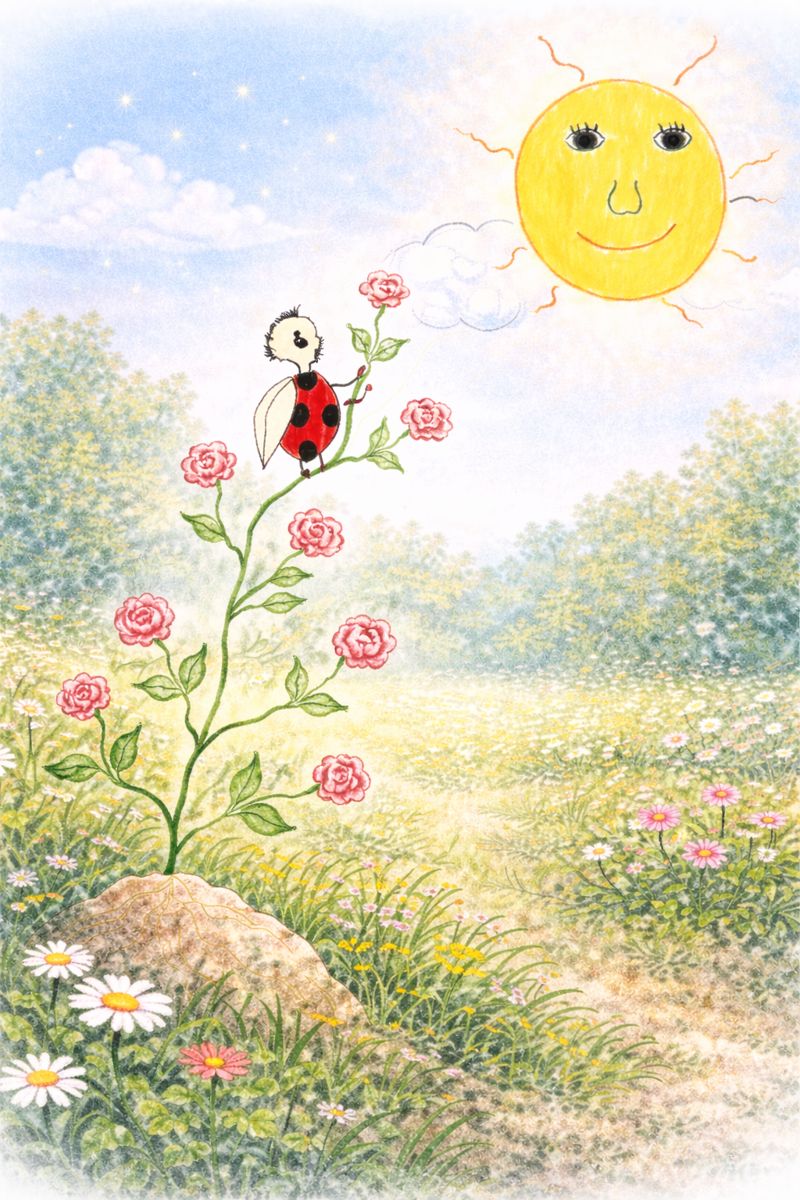
The Ladybug Poem beautifully reflects the timeless principle of “to thine own self be true,” using the small yet meaningful image of the ladybug to illustrate authenticity, purpose, and inner confidence. Through its gentle movement and simple nature, the ladybug symbolizes the quiet strength that comes from living according to one’s true identity rather than seeking approval or comparison with others.
The poem emphasizes that the ladybug does not attempt to become something it is not. It does not measure itself against larger or more powerful creatures, nor does it abandon its nature to gain recognition. Instead, it faithfully follows its own path, guided by instinct and purpose. This serves as a powerful reminder that fulfillment comes not from imitation, but from embracing who we are at our core.
A central message of the poem is that authenticity leads to peace. By remaining true to itself, the ladybug moves through the world with confidence and grace, reflecting the harmony that comes from self-acceptance. The poem gently encourages readers to trust their inner voice, value their uniqueness, and recognize that every individual has a meaningful role to fulfill.
Additionally, the ladybug’s humble presence teaches that greatness is not defined by size or status, but by integrity and faithfulness to one’s purpose. Its example inspires readers to live honestly, act sincerely, and pursue a life aligned with their values.
Ultimately, The Ladybug Poem offers a profound reflection on individuality and self-truth, reminding us that the greatest wisdom lies in honoring our authentic selves and walking confidently in our own light.
Additional Poems by Lora Hollings
Beginning with the gentle awareness inspired by The Ladybug Poem, a quiet sense of reflection continues to unfold through A New Day Has Come and the heartfelt message shared in The Gift of Love, where love and hope reveal themselves within life’s simplest moments. This spirit of reflection extends into Inspiring Poems About Daughters and the enduring wisdom found in Mothers Guide Us Throughout Life, each celebrating connection, compassion, and the lasting bonds that shape us across generations. These themes naturally lead toward the deeper contemplations explored in The Magic of Being and A Ladybug of Culture, where quiet observations and small moments are transformed into meaningful reflections on awareness, perspective, and the beauty discovered in simply noticing life as it unfolds.
The ladybug lights the way; she brings magic to my day. Let your heart sing! Celebrate the miracle of being, I can hear her say.
There’s never been anyone like you; with your special gifts, the lives of others you can enrich… if only you so wish. Feel the sun’s rays as it touches you; celebrate your life today– of seeing, of caring, of feeling. In the bird’s song, a renewed hope fills the air as the joy of life can be heard in nature’s own words… discover the beauty everywhere.
The ladybug wakes to the dawn, stretching wide as she yawns.
With wings, she rides a current of air to her lovely garden, landing on flower so fair.
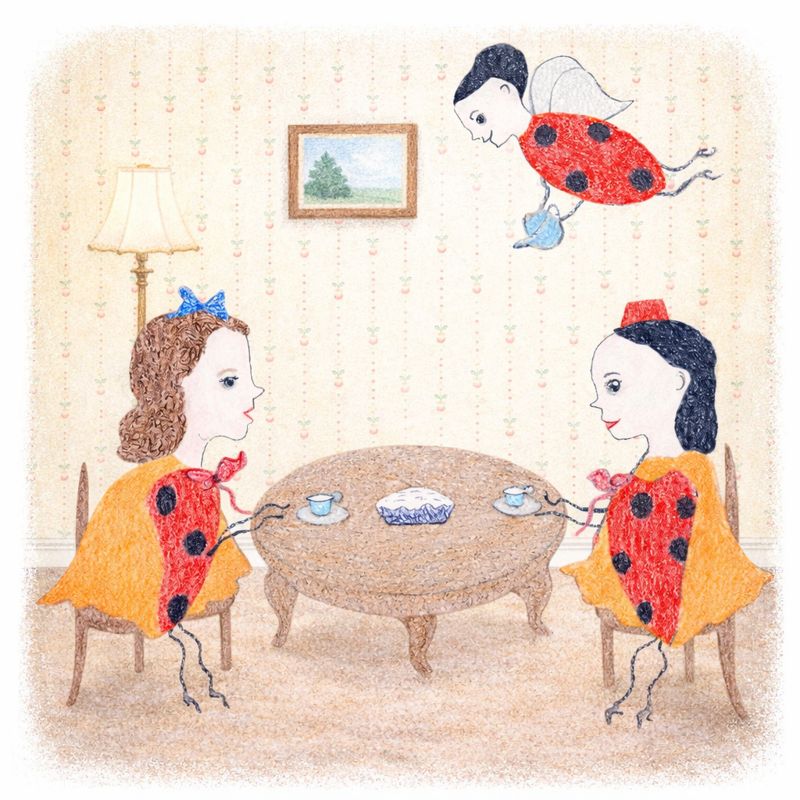
Paying a visit to her friends, she delights in a cup of tea with homemade scones and warm hospitality.
Then she bids them farewell as she returns to the place where she dwells, and reads from her favorite book of poems.
How content is she with life’s simple joys!
Filled with a sense of the magic of life and the beauty of the Earth of which she is part, the ladybug says a prayer from deep within her heart… before she retires for the night.
The poem describes a ladybug waking up to a new day, stretching and enjoying the morning.
She flies to her garden, meets friends, and shares tea and scones, highlighting warm hospitality.
The ladybug returns home to read her favorite poetry book, appreciating life’s simple joys.
Filled with magic and beauty, she offers a heartfelt prayer before bedtime.
From the playful curiosity of The Ladybug Poem to the gentle rhythms of The Ladybug’s Day, and from the quiet surprise in There’s a Ladybug in My Bed to the warmth found in Lydia the Ladybug and the reverent tone of Oh Lovely Ladybug, each poem offers a different lens through which to view this small but meaningful creature. Together, these moments of observation and imagination gently unfold into A Ladybug of Culture, where the ladybug becomes not just a subject of wonder, but a symbol of how attention, experience, and reflection shape the stories we carry from nature into ourselves.
The ladybug wakes up and remembers, it is a most special day– her friend’s birthday is today.
Her abode, a sweet little rose with crystal droplets of dew, reflecting sunlit petals into a rainbow of hue.
Now she must hurry, no time to tarry, as she makes cupcakes– vanilla, chocolate, and strawberry; making a pot of rose hips tea, she spices it ever so carefully.
She then tidies up– picking a fresh bouquet of buttercup to place on her table, with party favor for little bugs to savor.
Ribbons are hung and balloons strung to celebrate such an occasion… she hears the doorbell ring, the guests have arrived– oh, what presents they bring!
Then they all dance to a tune that the ladybug wrote, by the light of the full moon, ending on a most harmonious note as they all sing “Happy Birthday to you!”
The ladybug first appears in moments of simple delight in The Ladybug Poem and moves gently through the passing hours in The Ladybug’s Day, surprising us in There’s a Ladybug in My Bed and revealing quiet personality in Lydia the Ladybug. By the time we reach the tender admiration of Oh Lovely Ladybug, the ladybug has become more than a passing visitor. These small encounters ultimately lead to A Ladybug of Culture, where the ladybug’s quiet presence invites reflection on perspective, attention, and the deeper meaning hidden in life’s smallest details.
I wish I could fly across the stage like a bird with wings… But often times when I try to leap, I feel as if I have two left feet.
Balancing on the tips of my toes, I wish I could be like a leaf in a gentle breeze, effortlessly twirling around and around… falling silently to the ground.
I must be like the ladybug who flits from stem to flower and leaf to leaf– this little whimsy of nature who fires every child’s imagination with her fanciful form… a lovely fairy queen melting into the shadows of dreams.
Yet in stark daylight, dancing among the roses, her singular figure stands out– a prima ballerina dancing in nature’s elegant costume, leaving a trail of magic in my mind to a child’s favorite hiding place…
Where all my dreams come true and there I shall find her, the little ladybug queen, whose magic will transform me into the great dancer that I always wanted to be.
This poem offers insight into how imagination can become a bridge between limitation and possibility. At its core, it reflects the inner experience of someone who longs for grace and freedom but is keenly aware of their own struggles. The opening lines establish this contrast clearly: the desire to “fly across the stage” is immediately tempered by the reality of imbalance and self-doubt. Rather than presenting failure as an endpoint, the poem treats it as a starting place for reflection and growth.
The speaker turns to nature for understanding, and here the poem’s insight deepens. The leaf, the breeze, and especially the ladybug represent movement that is unforced and instinctual. These natural images suggest that grace is not always learned through control, but through trust and surrender. The ladybug becomes a symbolic guide—small, overlooked, yet perfectly suited to its world. By elevating it to a “fairy queen,” the poem reveals how imagination can magnify simple truths into powerful sources of inspiration.
Another key insight lies in the shift from dreamlike fantasy to daylight clarity. The ladybug as a “prima ballerina” suggests that artistry exists everywhere, not just on a stage. The poem ultimately teaches that transformation begins internally: belief, wonder, and vision reshape how one moves through the world. Greatness, the poem implies, is born not from perfection, but from seeing possibility where others see insignificance.
In The Ladybug’s Day and There’s a Ladybug in My Bed, the ladybug drifts through ordinary moments with quiet charm—appearing unexpectedly, lingering briefly, and leaving behind a sense of gentle wonder. These poems capture the playful and comforting presence of the ladybug in daily life, setting the stage for a deeper reflection found in The Ladybug Poem, where the small visitor becomes a symbol of innocence, attention, and the beauty found in noticing life’s simplest gifts.
There’s a ladybug queen who lives in a garden of roses. Of the flowers she takes special care; a gown of petals and leaves she wears from lovely roses grown there. With gesture and expression so serene, she is composed of gentle concern for all creation. She loves all the animals, living by a simple creed… to help those who are in need.
With her lovely song she charms and protects all from harm. She plants a seed in the desire to do a kind deed to all those who come.
With her healing touch, hate and fear disappear without a trace… in this magical place. Enveloped in this aura of beauty as they breathe in this fragrant air, those that are in despair are born anew in the light of her care.
Keener are their senses, with greater clarity is their vision– they now see with more accuracy than they ever have before, and those who once had little regard for other life… are transformed. They leave now, as they embrace all creatures great and small, with a greater sense of humanity and a kinder disposition toward all.
I may not be able to change the past I may not be able to abolish all crime. I wish that I could cure all disease, poverty, and eliminate all cruelty. But it is not possible.
I may never be in a position to stop wars. I may never find a cure for cancer or find all the answers to questions which I seek. It is true that I have limits.
But I can show mercy and kindess to all God’s creatures. I can choose not to be prejudice and show fairness to all people. I can act with concern for the welfare of others. I can bring light into the world by sharing my gifts with another. My life can make a difference… Because I can care.